
International business cannot succeed without international collaboration. In that kind of environment, interculturality and inclusion become a core part of organisational culture and the starting point for a truly inclusive workplace.
Organisations that operate internationally understand just how important inclusive practices are. It is crucial to have neutral policies and to create an environment where every employee has a real chance of professional growth, regardless of nationality, race or gender.
Open communication plays a key role here, alongside the ongoing development of inclusive leadership and encouraging mutual understanding among employees. Anica Vrlec Bartolić, Associate Director of People & Organisational Culture Development at ERGOMED Group, told us what interculturality and inclusion actually look like for them.
We see cultural diversity as one of our greatest strengths. Our shared values provide a clear framework for how we approach responsibility, quality, integrity, respect and collaboration. It is important to us that these values are recognised and lived by employees, regardless of where they are based, and that they are reflected in the way we work with clients and contribute to improving patients’ lives. Today, Ergomed Group employs people across 43 countries and five continents. If we also include the professionals who collaborate with us on projects, our employees work with colleagues and partners from more than 150 countries daily. In that sense, we are truly a global organisation. English is our official business language, yet only 16% of our 2,300 employees are native English speakers.
At the same time, we recognise that communication styles, decision-making processes, approaches to feedback and relationship-building can vary significantly across cultures, and sometimes even between individuals. Rather than trying to standardise or “equalise” different cultures, we focus on creating an environment where differences are understood, respected and embraced as opportunities for learning and growth.
Our educational campaigns are designed as an ongoing learning opportunity available to all employees. Alongside formal development programmes, academies and leadership initiatives, we also offer micro-learning opportunities through campaigns and internal newsletters. These programmes allow different teams to introduce their work to the wider organisation, strengthen business understanding and create new opportunities for connection and collaboration. Some campaigns focus on important DEI and ESG topics, while others are developed in response to specific organisational needs. Employees also have the opportunity to contribute content through our Employee Resource Groups. The goal is to create space for reflection, dialogue and personal growth. Topics often include unconscious bias, empathy, emotional resilience, mental health and psychological safety.
We have seen employees become increasingly open to discussing topics that may previously have been overlooked or considered difficult to address. There is a growing awareness of the importance of mutual respect and of creating a safe environment where people feel comfortable expressing themselves. While these changes do not happen overnight, the consistency of our campaigns helps ensure that diversity and inclusion become a natural part of our culture. A significant number of employees contribute to these initiatives, particularly those who are personally passionate about the topics and eager to make a difference. Their creativity and engagement are clearly reflected in both the development of the campaigns and the way they are embraced across the organisation.
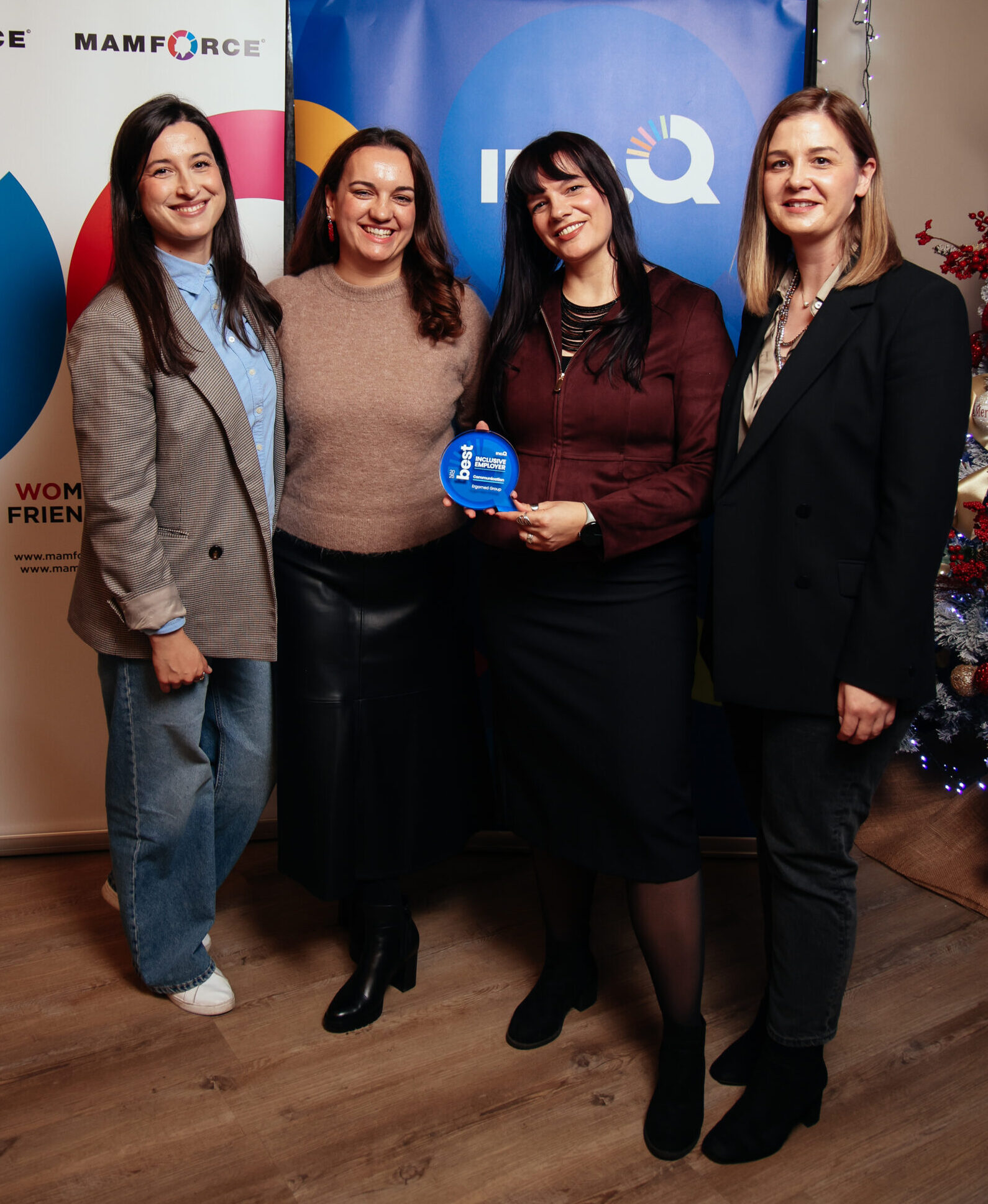
Nikolina Bulat, Anica Vrlec Bartolić, Jasmina Punek & Ivana Topalović
Effective communication in an international environment begins with recognising that the same communication style does not work equally well across all cultures. In some cultures, people communicate very directly, while in others greater emphasis is placed on context, careful wording and avoiding open disagreement. That is why we encourage both employees and leaders to continuously learn about cultural differences and to approach communication with sensitivity and awareness. Cross-cultural communication is a recurring topic within our development programmes and educational campaigns.
Managers and leaders play a particularly important role because they shape the communication culture within their teams every day. We encourage them to build trust, openness and understanding. In international teams, it is not enough to focus solely on what has been said; it is equally important to ensure that the message has been understood as intended.
GoFluent is one of the learning opportunities available to our employees. Because we work in multilingual teams and 84% of our employees are not native English speakers, language support plays an important role in helping people communicate confidently and contribute effectively. The platform allows employees to develop their language skills through a variety of learning formats tailored to their individual needs and proficiency levels. This may include self-paced learning, AI-supported exercises and more structured development of business communication skills. Investing in language development helps reduce barriers that can sometimes affect participation in discussions, asking questions or taking a more active role within a team.
When employees feel more confident communicating in a shared language, they are better able to contribute, express their ideas and engage in collaborative work. For us, language learning is therefore much more than a development opportunity: it is an important enabler of inclusion.
Our leaders play a key role in promoting intercultural understanding because they shape the employee experience every day. While culture is partly built through development programmes, it is ultimately reflected in daily interactions, communication styles and the decisions our leaders make. That is why we expect our leaders to be aware of the impact they have and to actively contribute to creating an inclusive environment. We focus on topics such as psychological safety, providing feedback in multicultural environments, leading international teams and ensuring equal development opportunities for all employees.
For us, inclusive leadership means recognising the diversity within a team and turning those differences into a source of strength. All of our leaders participate in development programmes because we believe continuous learning is essential to organisational success. What is particularly valuable is when leaders demonstrate, through their own example, a willingness to learn, grow and remain open to new perspectives.
One initiative that is particularly meaningful to me is our Talent Development Programme.
This global development programme brings together participants from different countries, functions and business areas. Employees work in international teams on real organisational challenges, creating a unique combination of practical experience, cross-functional collaboration and multicultural teamwork. Through the programme, participants develop both business and leadership capabilities while gaining first-hand experience of working in a global environment. This helps them better understand the broader context of our organisation and actively contribute to shaping its future. In this setting, diversity becomes a source of learning, innovation and stronger solutions.
Over the past three years, the programme has involved more than 100 employees and approximately 30 leader mentors. Beyond individual development, one of its most valuable outcomes has been the implementation of practical solutions generated through participant projects. The networking element is equally important. Participants build relationships with colleagues from different countries and teams, and those connections often continue long after the programme ends. This strengthens collaboration, facilitates knowledge sharing and fosters a stronger sense of connection across our global organisation.
Another initiative worth highlighting is our reverse mentoring programme, where senior leaders are mentored by younger colleagues from different cultures and parts of the organisation. This creates valuable opportunities for exchanging perspectives and reinforces the idea that learning does not only flow from the top down. The programme helps strengthen mutual respect, reduce generational and cultural barriers and encourage a more inclusive leadership approach. Participants often become ambassadors for inclusive ways of working, helping to spread these practices throughout Ergomed Group and across different regions.
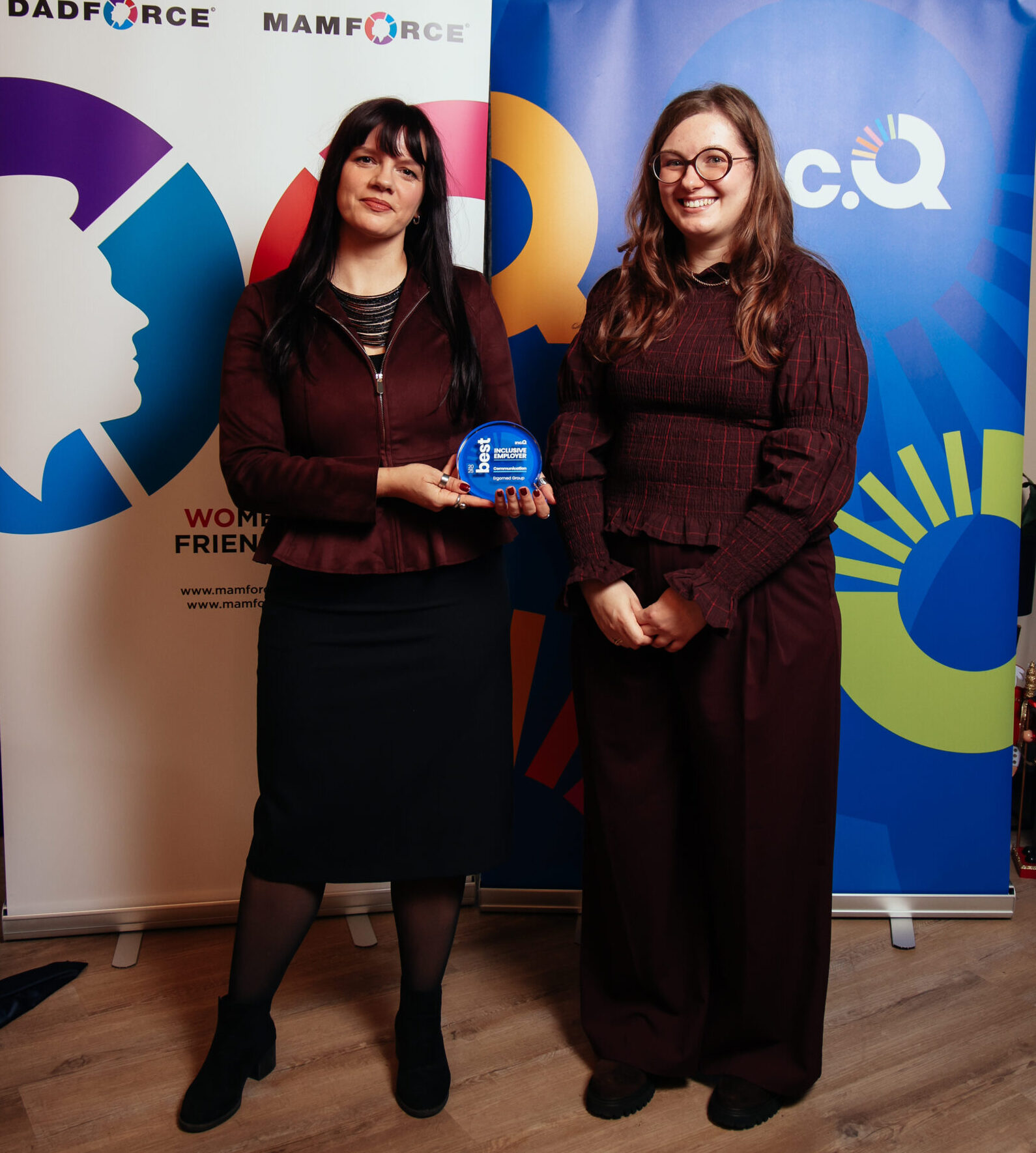
Jasmina Punek & Anja Špoljarić
ERGOMED shows that inclusive communication is not just a good intention but a real business advantage. Shared values, language learning, leadership development and programmes that connect colleagues from all over the world have turned differences into the strength of a global team.
These are exactly the practices recognised at the IncQ BEST Inclusive Employer Awards 2025, where ERGOMED was named the best Life Science company for inclusive communication. The award confirms that investing in people shows, both inside the organisation and beyond it.
Apply for the IncQ BEST Inclusive Employer Awards and stand alongside most inclusive employers.


